















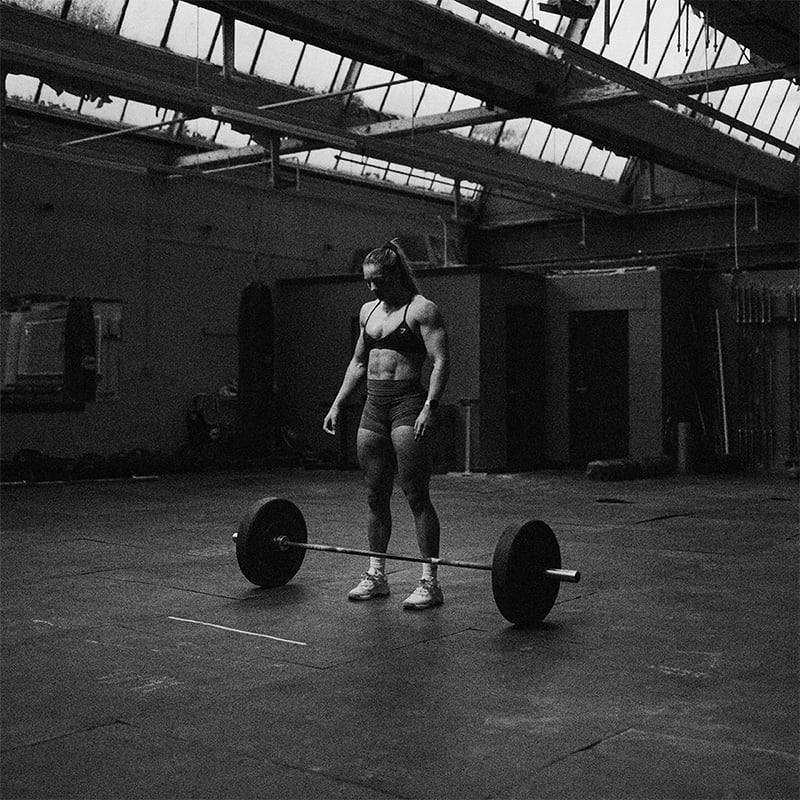
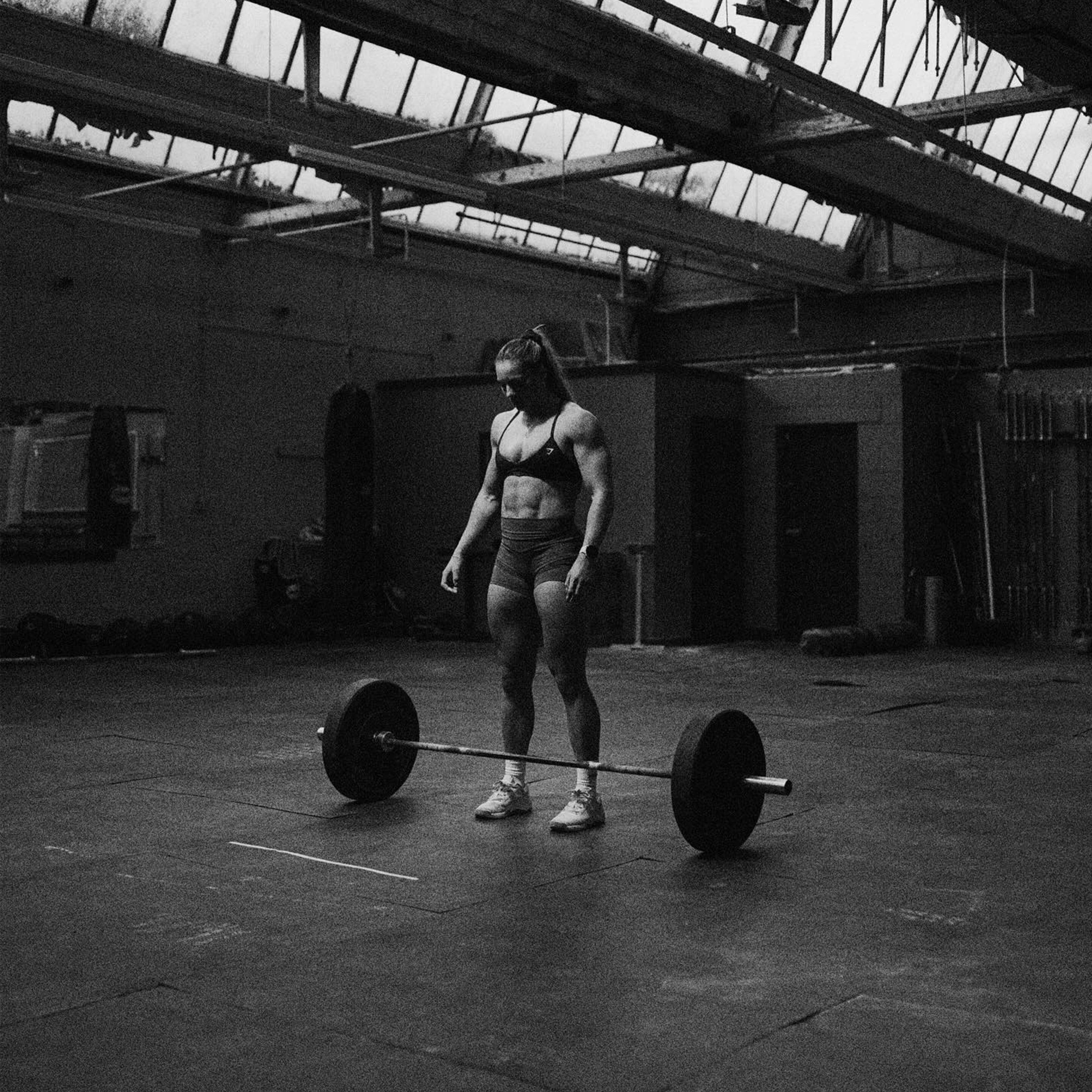
If you’re curious about dipping your toe into Olympic lifting, you’ll probably start with a clean: a powerful barbell lift that’s common in functional fitness classes and forms one half of the clean and jerk in Olympic lifting.
Mastering a clean is incredibly satisfying — there’s nothing like catching the bar solidly on your shoulders and standing back up feeling strong and in control.
But here’s the thing: while cleans look effortless when done well, they’re highly technical. From footwork and bar path to mobility and coordination, every piece of the puzzle matters, which can make them feel daunting at first.
In this guide, we’ll break down exactly how to do a clean, the different variations you’ll encounter, common mistakes and how to fix them, plus the drills and warm-ups that will help you nail your technique.
Whether you’re prepping for your first weightlifting class or looking to fine-tune your form and start lifting heavier, we’re going to cover the main types of cleans and how to do them safely and effectively.
@ameliepelta PB clean double! out in Madrid for a training camp🇪🇸💓 Things moving in the right direction🫶🏼 #fyp #weightlifting #foryouu #gymtok #gymgirl ♬ original sound - Amelie Rose
What Is A Clean?
This Olympic lifting staple probably isn’t what you see regularly in a commercial gym–but with the rise of functional fitness, cleans are becoming more popular.
The exercise (which is technically one half of the official Olympic lift, the clean and jerk) involves lifting a barbell from the floor (or just above the knees) and bringing it up to your shoulders in one powerful motion.
Cleans build power, strength, and speed, and can even improve body composition and body fat percentage as a resistance exercise [1,2].
You’ll hear a few different names for the clean lift thrown around–from squat clean to power, hang to low hang. These refer either to the start or end position of the exercise (more on that later).
As with any Olympic lift, getting the technique right for cleans can take a little time and perseverance at first–but the result when you master it is very rewarding. We’re going to guide you through every step of the way to show you how to do a clean.
How To Do Cleans: Step-by-Step Technique Guide
As mentioned, there are a few different types of cleans. These are:
Squat cleans: This is the standard type of clean where the bar is pulled from the floor (as shown above). You extend your hips and drop into a full squat, catching the bar on your shoulders. For this type of clean, you can generally lift heavier than you can with a power clean.
Power clean: For this clean variation, the bar also starts from the floor, but you catch it on your shoulder with knees bent slightly, hips back, chest tall (rather than dropping into a full squat). Beginners usually start by learning power cleans before squat cleans.
Hang power/squat clean: A hang clean starts the bar from a hang position (i.e., above the knees), rather than the floor. You’ll often see this variation used in a clean workout focused on quick reps and higher sets. You can also perform a low hang clean or high hang, the former being below the knees, and the latter from the hip crease.
If you want to start doing full cleans, we recommend learning power cleans first, then moving on to master squat cleans, and finally hang cleans.
How To Do Squat Cleans
The squat clean is the classic version of the lift–the one most people mean if they just say “clean.” You pull the bar from the floor, drive through your hips, then drop into a deep front squat to catch it on your shoulders. It’s technical, powerful, and a little intimidating at first, but also incredibly rewarding.
Because you have to move quickly under the bar into a full squat, this variation demands strong legs, solid mobility, and the confidence to commit. But once you master it, you’ll be able to lift heavier loads than with a power clean–since you don’t need to pull the bar quite as high.
Setup & Grip – Stand with feet hip-width apart, barbell over your midfoot. Grip the bar just outside your knees with a hook grip, lowering into a half squat so your hips are slightly higher than your knees. Keep your chest lifted, back flat, and shoulders just in front of the bar. Engage your lats by thinking about
wrapping the bar back around your thighs to keep it close.
First Pull (floor to knee) – Push through the floor to lift the bar smoothly up to your knees, keeping your back angle steady and the bar close to your shins.
Second Pull (knee to full extension) – Once the bar clears your knees, drive explosively through your hips, knees, and ankles—shrugging tall as you extend fully. This triple extension creates the upward power you need for the lift.
Third Pull (pulling under the bar) – As the bar rises, pull yourself quickly under it. Rotate your elbows through fast and catch the bar high on your shoulders in the front rack position, dropping into a full squat to stabilise the catch.
Stand Up – From the squat catch, brace your core and drive through your legs to stand tall, locking in the bar on your shoulders with a strong chest and stable posture.
What is hook grip? Instead of just wrapping your fingers around the bar, you wrap your thumb around the bar first, then wrap your fingers over your thumb, “locking” it in place. This creates a more secure grip, so the bar is less likely to roll out of your hands during explosive lifts such as cleans and snatches.
How To Do Power Cleans
Similar to the squat clean, but instead of catching the bar all the way down in a deep squat, you stop higher–in a quarter-to half-squat position. That makes it easier to learn, faster to recover from, and a go-to choice for beginners.
The power clean teaches you the essentials: explosive hips, a sharp pull, and a quick turnover of the elbows. It’s also a favorite in functional fitness and athletic training because it builds speed, power, and coordination without beating you up with heavy squats every rep.
Setup & Grip – Stand with feet hip-width apart, bar over mid-foot, hands just outside your knees using a hook grip. Keep your chest up, back flat, and shoulders slightly over the bar.
First Pull – Lift the bar from the floor to just above your knees by driving through your legs, keeping the bar close and your back angle steady.
Second Pull – Explosively extend hips, knees, and ankles (triple extension) while shrugging your shoulders tall to propel the bar upward.
Pull Under & Catch – Quickly pull yourself under the bar and catch it in a partial squat or standing position, with elbows rotated up and the bar resting on your shoulders (front rack).
Recovery – Stand tall, keeping the bar stable on your shoulders and your core braced. Reset before repeating for the next rep.
How To Do Hang Cleans
Think of the hang clean as the clean’s quicker, snappier cousin. Instead of starting from the floor, you begin with the bar already in your hands at a “hang” position—anywhere above the knees. From here, it’s all about speed and timing.
You can finish the lift by dropping into a full squat (hang squat clean) or catching it higher in the power position (hang power clean). Because you skip the pull from the floor, hang cleans are often used in workouts that call for fast reps, crisp technique, and serious conditioning.
Coaches might also mix things up with a low hang clean (bar just below the knees) or a high hang clean (bar starting from the hip crease), each one testing your explosiveness and bar control in a slightly different way.
Setup & Grip – Start with the bar hanging just above your knees (hang position). Stand with feet hip-width apart, hands just outside your knees, using a hook grip. Your torso should lean forward slightly (around 45°), lats engaged as if “wrapping the bar around your thighs,” and glutes activated to create a solid, powerful base. Keep your chest up and back flat.
First Pull – From the hang, initiate the lift by pushing through your legs and extending slightly at the hips to create upward momentum. Keep the bar close to your body.
Second Pull – Explosively extend through your hips, knees, and ankles (triple extension) and shrug your shoulders to drive the bar upward.
Pull Under & Catch – Quickly drop under the bar, rotating your elbows up and forward, and catch it on your shoulders either in a power position (partial squat) or full squat, depending on your goal.
Recovery – Stand tall, bracing your core and stabilizing the bar in the front rack. Reset before performing the next rep.
FYI: You might want to wear a t-shirt instead of a tank for cleans. When you catch the bar in the front rack, it can land a little heavy across your shoulders and collarbone, and a t-shirt gives you a bit of extra padding while you get used to the movement. You may also want to wear a wrist wrap to support your wrists and prevent any aches.
Types & Variations of the Clean
Clean Complexes
Cleans don’t just show up on their own–they’re often paired into complexes, where you link two or more lifts back-to-back in one sequence. These mean you can sharpen technique across multiple movements whilst building strength and cardiovascular conditioning (and yes, before you ask, lifting heavy complexes will really get your heart rate up, trust us).
Common clean complexes include:
Clean + Front Squat – Catch the clean, then go straight into a squat for extra leg strength.
Clean + Push Press / Jerk – Follow the clean with an overhead press or jerk to train full-body power.
Clean Pull + Clean – A partial pull before the full lift to reinforce technique and explosiveness.
Hang Clean + Clean – Start from the hang position, then go into a full clean to develop timing and speed.
Clean + Thruster – Catch the clean and drive straight into a front squat plus press for conditioning.
Equipment Variations
While cleans are most commonly done with a barbell, mixing in other equipment can help you when you’re learning, challenge your body in new ways, and keep workouts interesting:
Dumbbell Clean – Can be performed with one or two dumbbells. This variation is excellent for developing unilateral strength, improving balance, and correcting left/right imbalances. It’s beginner-friendly and easier to manage than a barbell.
Kettlebell Clean – Involves a slightly different wrist turnover to smoothly guide the bell into the rack position. Great for conditioning, grip strength, and explosive hip power, and it’s often used in circuits or hybrid training.
Medicine Ball Clean – A beginner-friendly variation that teaches the clean movement pattern without the complexity of a barbell. The medball is light, easy to control, and safe to drop, making it perfect for learning hip extension, coordination, and timing. It’s also great for warm-ups, conditioning, or high-rep workouts where speed and flow matter more than load.
Sandbag Clean – The sandbag is unstable and awkward, forcing your core, grip, and stabilizing muscles to work harder. It’s excellent for functional, real-world strength and is often used in conditioning or high-rep workouts.
Common Clean Mistakes And How to Fix Them
❌ Pulling Too Early With Your Arms
👉 It can be tempting to bend your arms and ‘pull’ the bar up–the bad news? This is a guaranteed way to lose power. As soon as you try to pull the bar up, you move the work to your upper body, reducing the force generated from the hips.
This is one of the most common mistakes among beginners learning cleans (as confirmed in this 2021 study that found beginners often “rush” the lift — extending hips and pulling with the arms too early) [3].
✅ The same study advised beginners to emphasize *patience in the pull–*keeping the bar close, waiting to extend the hips fully, and resisting the urge to pull with the arms too soon. Relax your arms and keep them straight as long as possible. Think about the legs doing the work, the arms just guiding.
❌ Poor Front Rack Mobility
👉 Cleans require you to catch the bar with elbows forward and high, the barbell resting on the front of your shoulders. If your wrists, shoulders, or thoracic spine aren’t flexible enough, the bar won’t rest comfortably on your shoulders, which can make catching the clean awkward or painful.
✅ Incorporate front rack mobility drills frequently into your training, and particularly within your clean warm-up. Practice front rack holds with lighter weights or PVC.
❌ Not Fully Extending The Hips
👉 Failing to fully extend the hips before you pull under the bar means you will miss out on a lot of power, making it much harder to get under the bar for the catch.
✅ Practice ‘getting tall’–squeeze your glutes to bring your shoulders behind your hips and actively shrug the bar at the top of the pull. Practice high hang or hang power cleans, focusing on extending the hips before getting under the bar.
❌ Letting The Bar Travel Too Far From The Body
👉 During a clean, the bar should be kept close to the body to maximize efficiency, speed, and power. Let the bar drift too far from your body, and it will arch outwards (instead of moving vertically), losing power from the hips and legs and making it harder to catch smoothly in the front rack.
✅ Keep the bar close by engaging your lats (in the setup, ‘wrap’ the bar around your shins) and keeping it close to your shins and thighs.
How To Program Cleans
How often to practice: If cleans are an area you want to focus on improving, aim to practice them at least once or twice a week.
How many reps/sets: If you’re new to the clean exercise, or want to focus in on your skill/technique, use lighter weights and moderate reps (e.g. 2–3 reps per set, 3–5 sets). For building strength, use heavy weights, lower reps, and longer rest between sets. (e.g. 1–3 reps per set, 3–5 sets).
What weight to use: If you’re a beginner, you may want to start with a PVC pipe/dowel, training bar, or empty bar. In fact, even experienced lifters will use an empty barbell during warm up. Always prioritize form over weight.
How To Warm Up For Cleans
When warming up for cleans, mobilise key muscle groups and then perform a specific barbell warm-up.
Mobility Prep:
Ankle Mobility – e.g., Deep squat holds, calf stretches, or wall ankle mobilizations to allow proper depth in squat cleans.
Hip Mobility – e.g,. Hip flexor stretches, 90/90 hip rotations, or lunges to ensure full hip extension during the pull.
Thoracic Spine / Upper Back – e.g., Cat-cow, thoracic extensions over a foam roller, or wall slides to maintain an upright torso.
Shoulder & Wrist Mobility** – e.g,. Shoulder pass-throughs, banded shoulder openers, and wrist stretches to safely hold the bar in the front rack.
Glute & Core Activation – e.,g. Glute bridges, banded side steps, and planks to stabilize the hips and protect the lower back during explosive lifts.
Barbell-Specific Clean Warm Up:
Warm up with an empty barbell, performing 2-3 sets of:
Tall muscle clean x5
Hang muscle clean x5
Front rack openers x5 each side
Front squat x5
Tall clean x5
Hang clean x5
Full clean x5
Then, perform your complex a couple of times with an empty barbell and gradually load weight up to your starting weight.
Mastering the Clean: Final Thoughts
If you’re new to Olympic lifting, it’s natural for cleans to feel confusing and even a little intimidating at first. They’re fast, technical, and demand strength, speed, and mobility all at once. The key is not to rush the process. Break the lift down into its components, focus on your technique, and practice consistently with light weights until the movement feels smooth and natural.
Starting with power cleans is a great way to build confidence and learn the fundamentals before progressing to squat cleans, hang cleans, and more complex variations. Along the way, keep your focus on quality over load — the weight will come with time.
With patience and practice, you’ll not only refine your technique but also develop explosive power, full-body strength, and the confidence that comes with catching a clean solidly. Stick with it, and the clean won’t just feel less daunting — it will become one of the most rewarding lifts in your training repertoire.
FAQs Cleans
What Are The Benefits Of Doing Cleans?
Cleans aren’t just for oly lifters and functional athletes–they actually come with many benefits making them an excellent exercise for regular gym goers to specific sports players.
Benefits of cleans include:
Build Strength & Power: A 2018 study of 40 high school football players over 8 weeks found that those training power cleans saw greater gains in squat and power clean compared to those practising deadlifts.
Improve conditioning: Higher-rep cleans or complexes spike the heart rate, combining strength and cardio for an effective workout.
Full body exercise: Cleans hit nearly every major muscle group in a single movement, making them a very effective compound exercise.
Improve Body Composition: It might not be the first exercise you think of for aesthetics, but as a form of high-intensity resistance training, cleans can improve body composition. Studies on athletes participating in CrossFit-based programmes, which included cleans, support this, for example, this
2025 study of 32 male basketball players who experienced improvements in body composition, as well as muscle strength and basketball-specific skills after 8 weeks of training.
Advance Mobility & Stability: Catching the bar in the front rack and squat requires strong core stability, shoulder mobility, and ankle/hip range of motion.
This is why they are used by a range of athletes across different sports, as the skills learnt from doing cleans are extremely transferable.
Are Cleans Safe For Beginners?
Yes! But they need to be approached the right way. Cleans are a complex exercise and carry a risk of injury if you don’t learn the technique properly and try to lift too heavy, too soon.
If you’re a beginner, follow these tips for getting started learning how to do cleans:
Focus on form over load: 2–3 sessions a week at light weights is enough to build skill.
Use progressions: medicine ball → PVC/dowel → empty barbell → gradual loading.
Ideally, learn from a coach or knowledgeable trainer, since small cues (like keeping the bar close) make a huge difference.
With these tips you should be able to safely learn how to do a clean, and set good technique and form from the start.
What Muscles Do Cleans Work?
Cleans train your legs, hips, back, shoulders, and core all at once, which is why they’re such a staple for developing total-body strength and athleticism.
Muscles worked during the clean lift include:
Quads
Glute
Hamstrings
Calve
Traps
Deltoids
Lats
Erector Spinae (lower back)
Core (abs & obliques)
Forearms & Grip
Should I Do Cleans Before Or After Other Lifts In A Workout?
Cleans are a high-skill movement where you may be lifting heavy. This means you need maximum energy (and concentration)–so you should do them straight after your warm up, before any other lifts or accessory work.
Should I Catch The Clean High Or In A Squat?
This depends on whether you’re doing a power clean or squat clean:
In a power clean, you catch the bar high (in a quarter-to-half-squat)–This is usually preferred for beginners learning technique, athletes working on power, or high-rep circuits.
In a squat clean, you drop into a full front squat to catch the bar–This is useful for lifting heavier weights, but requires good mobility and confidence.
Why Do My Elbows Drop When I Catch The Bar?
This could be due to a number of reasons, including:
Poor front rack mobility
Catching too early or too high
Weak upper back or core
Timing issues, i.e,. Pulling under too slowly
To fix this practice some front rack mobility drills and review your technique using a lighter weight and filming yourself or getting a coach to watch you.
References:
[1] Ayers, J., DeBeliso, M., Sevene, T. and Adams, K. (2016). Hang cleans and hang snatches produce similar improvements in female collegiate athletes. Biology of Sport, [online] 33(3), pp.251–256.
[2] Shaw, I., Triplett, T. and S. Shaw, B. (2022). Resistance Training and Weight Management: Rationale and Efficacy. Weight Management - Challenges and Opportunities [Working Title].
[3] James, L.P., Comfort, P., Suchomel, T.J., Kelly, V.G., Beckman, E.M. and Haff, G.G. (2019). Influence of Power Clean Ability and Training Age on Adaptations to Weightlifting-Style Training. Journal of Strength and Conditioning Research, 33(11), pp.2936–2944.
[4] Roberts, M. and DeBeliso, M. (2018). Olympic lifting vs. traditional lifting methods for North American high school football players. Turkish Journal of Kinesiology, 4(3), pp.91–100.
[5] Hassan, A. (2025). The impact of CrossFit training on body composition, muscle strength, physiological adaptations, and the development of rebounding and footwork skills in basketball players. Retos, 70, pp.788–804.