














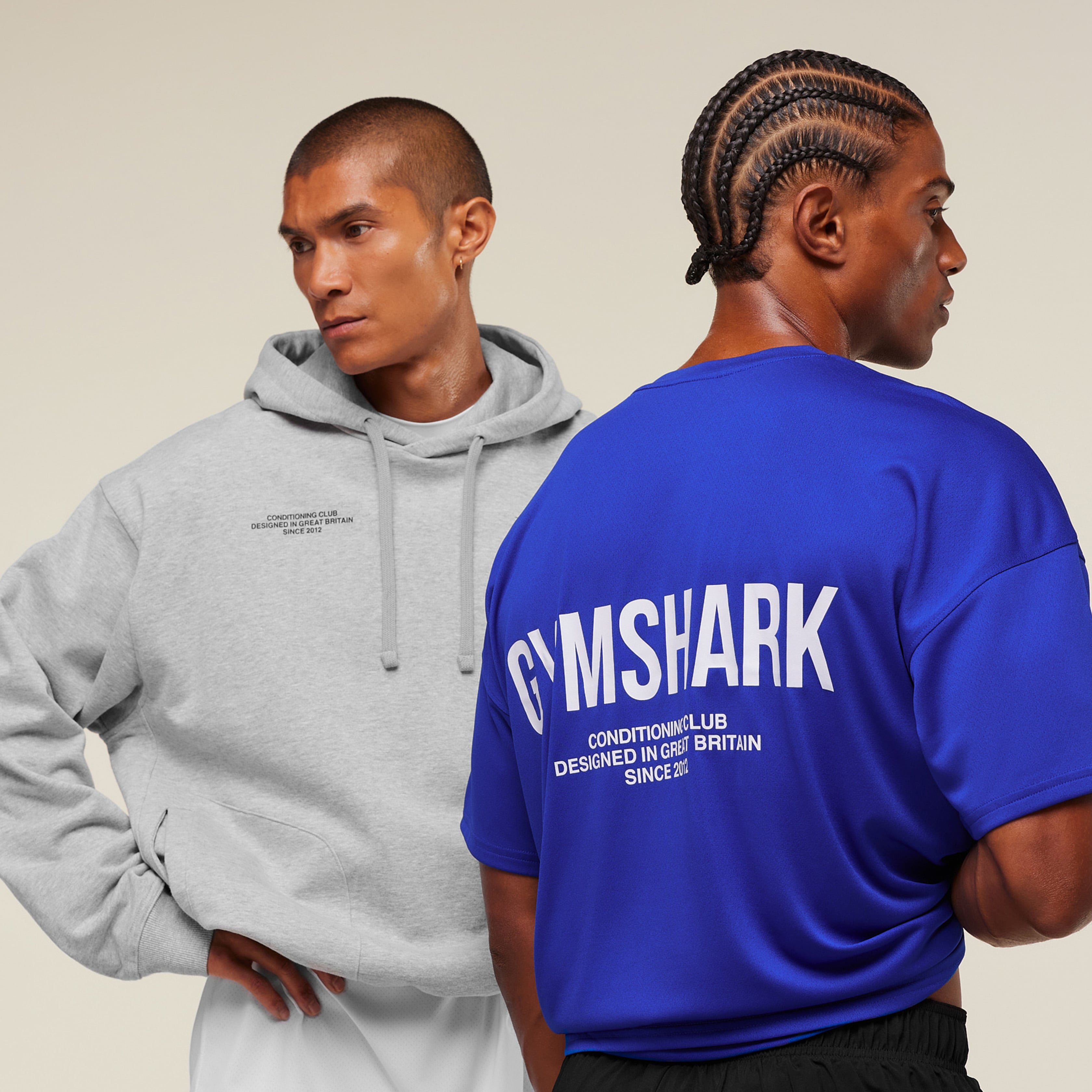
Pick it up. Throw it on. Feel good. Done.
But here's the thing: not all tees are created equal.
From muscle to compression, slim to oversized (and everything in between), fit matters. It shapes how a tee feels, how it moves and ultimately, how it moves with your body. It's the difference between something that gets worn once because it rides up, and something that becomes your go-to.
And we totally get it. Figuring out what's-what can be an outright minefield. Some fits hug in the right places, others hang just right. Some show off the work you've put in, and others give you room to breathe. And it's not just the cut - fabric plays its part too.
That's why we've broken things down. This guide walks you through the core fits in our collection - what they're built for, how they're meant to be, and how to find the right one that works for you. Whether you're after a tee that works as hard as you do in the gym, or just something that's clean and crisp for weekend layering - we've got you covered.
How Should My Gym Shirt Fit?
Like most shirts, your workout shirt should allow you to move freely, keeping you comfortable and unrestricted as your work out, but so many elements of the fit depend on your preference. We’ve provided a link to our standard sizing guide below for a quick reference but stay with us as we delve deeper into how to find the perfect tee.


Compression Fit
Muscle Fit
Slim Fit


Regular Fit
Oversized Fit
Extreme Oversized Fit
Compression Fit
Muscle Fit
Slim Fit
Regular Fit
Oversized Fit
Extreme Oversized Fit
Muscle-fit & Compression-fit
While both muscle-fit and compression-fit tees are designed to sit close to the body, the key difference is in how and where they’re tight. “Compression-fit is a true second skin - tight across the entire body. Muscle-fit, on the other hand, is designed to be fitted specifically around the chest, arms and back, where the biggest muscle groups are,” explains Jonny Hargrave, our Senior Product Buying Executive. As a result, muscle-fit tees tend to be more forgiving around the midsection compared to their compression-fit counterparts.
Our compression-fit shirts are all about the fit; while they’re not medical grade compression and don’t offer any health benefits, they’re the lightweight, skintight tees you’ll reach for for a distraction-free workout. Being tighter, they emphasize the body and abs, making them a firm fave for accentuating the physique. Wear alone to show off your hard work, or under your fave gym pieces as a sleek base layer… adios chafing 👋🏽
Their tight fit makes them great for high-intensity activities, too, as they tend to sit snug to your body, which means no hem lifting up whether you’re box jumping or practicing your calisthenics handstands.
“When wearing a muscle fit style, the sleeves, whether that’s a t-shirt or long sleeve should fit snug around the arms. This is to show definition or enhance the look of the arm muscles. Key styles that show this well are Tectonic and Geo Seamless. With this style being tighter on the body, it’s a lot easier to tuck into shorts and joggers, giving a contoured look.” Shares Fran.
Sizing: For our muscle fit and compression shirts, you don't need to size down, these are designed to fit close to your body and will naturally feel quite tight.
Slim Fit
Our slim-fit shirts aren’t quite a regular fit, but they’re not as tight as muscle or compression-fit tees either—they sit somewhere right in the middle. Cut to gently follow the shape of your upper body, they offer a clean, tapered silhouette that hugs the chest and arms slightly without feeling restrictive.
The fit skims, rather than clings, which means you’ll still get that athletic look, but with a bit more breathing room. Perfect for those who like to show off their training progress without going full skin-tight, they’re a go-to for day-to-day wear, light training sessions, or layering under an open overshirt or pump cover. Think fitted, flattering, and versatile - the kind of tee that works hard in and out of the gym.
If you like a little more room in your t-shirts (especially around the upper chest), we'd recommend opting for a regular fit tee).
“A slim fit style is perfect if you still want some muscle definition in the arms and upper body but want a bit of extra room in the fabric around the torso when working out. This style is a looser fit in the body so not skin tight like a muscle-fit tee would be.” Fran explains.
Regular Fit
A regular fit t-shirt is designed for those who want comfort and ease of movement without the tight, physique-hugging feel of slim or compression styles. It follows a classic, straight-cut silhouette that gives you room where you need it (particularly through the chest, sleeves and torso) while still maintaining a clean, structured look.
Unlike an oversized fit, the shoulders are cut to sit neatly on your natural frame, offering a relaxed feel without looking loose or overly-slouchy. This makes it a versatile option for training, layering, or everyday wear - and is perfect for those of you who prefer a more traditional t-shirt feel..
“This style will most likely have a straight hem and hang loose - without feeling oversized - when worn, making it universally loved by all.” Francesca shares.
Oversized & Extra Oversized Fit
You can’t go far without spotting an oversized T-shirt, whether it’s in the gym, out running errands, or all over your socials - it’s one of the most popular men’s shirt styles right now and for good reason. A trending staple that’s here to stay, oversized tees bring that effortless, laid-back aesthetic to your ‘fit without neglecting comfort.
Designed with extra fabric for a boxier fit, generally, the sleeves and hem on an oversized t-shirt will sit lower than your regular shirts, with features such as 'dropped shoulders' creating a more relaxed shape, perfect for pairing with your joggers or shorts for off-duty days. But it’s not just your rest days that oversized tees are perfect for; we’ve all heard of Pump Covers (the oversized tee you wear while you warm up before a big reveal of your pump) so they’re perfect for your lifting sessions too.
Sizing: Aome of our tees are extremely oversized, we’re talking O-ver-sized, we really didn’t hold back on the fit. So, if you’re after more of a natural baggy look rather than full-on oversized, you might consider sizing down on anything labelled 'extra oversized' on site.
. . .
How To Measure For The Right T-Shirt Fit 👇
When it comes to finding the perfect tee, there’s the fit of the tee, and then there’s the way the tee fits you. We've shared our generic sizing guide, but to help you get the fit that gives you that PB feeling, we have a few more tips up our sleeve 👀
Sleeve Lengths
Stand up straight and grab a soft measuring tape.
Place one end at the base of your neck (where your spine meets your neck) and hold it firmly in place.
Run the tape over your shoulder and pause at the shoulder to make sure the tape stays flat - no gaps or folds.
Continue running the tape down your arm. For long sleeves, measure to the end of your wrist or where your palm begins. That’s your sleeve length.
For short sleeves, the length you’ll want to go for depends on the style of the T-shirt.
Regular and slim-fit t-shirts look best when the sleeves end around the mid-bicep, so go for this as your sleeve length.
Oversized tees look best sitting on or just above the elbow, so opt for this as your sleeve length.
Chest And Waist
Waist
Try to remove any clothing from your waist while you measure, and ensure you’re not holding your breath or on a big inhale.
Place the measuring tape in line with your belly button and hold it in place
With the other hand, pull the measuring tape around your waist
Pull the tape so that it fits snugly around your waist, it should sit flush with your skin with no gaps, but not so tight that it digs in
Where the measuring tape meets the start of the tape, this is the measurement to take down.
Chest
Similar to the waist, try to ensure there is no clothing on your chest and that you breathe normally. Ensure you’re also standing up straight - not puffing your chest or arching your back, as this could cause inaccurate readings.
Wrap the soft measuring tape around the fullest part of your chest (generally across the nipples) and under your armpits.
Pull the tape to a snug fit, again ensuring there are no gaps but that there is space for you to breathe in and out normally.
Where the tape meets again is your chest measurement.
The Hem
Where the hem sits can depend largely on the type of shirt you are wearing and your personal style. A general guide is that it should fall below your waistline, covering your waistband and sitting around your hip area.
“The hem is the bottom of the t-shirt, which is folded over and stitched to finish off the garment neatly. We offer different variations here at Gymshark. Some styles like our impact muscle-fit range offer a dipped hem, which is rounded to create the appearance of a smaller waist, as it creates a triangular look from your shoulders to the point of the rounded hem. While the standard straight hem is available on most products, such as our oversized tees.
"We occasionally do different lengths as well including tall, regular and boxy. Boxy is our shorter length, used on oversized tops to create a shorter baggy appearance, a look that is currently trending.” Jonny shares.
. . .
Still not sure?
You should now be an expert in all things t-shirts and tops, equipped with everything you need to find the perfect fitting tee.
But finding the right t-shirt fit is personal, and even with all the information in the world, sometimes you won’t know until you try it on. That’s why we’ve got you covered with free returns and exchanges - so you can test out your fit, move in it, and make sure it’s the one. For the rundown on our best workout tees, our writer Lannay Dale-Tooze has given the run-down.
The right fit doesn’t just change how you look, it changes how you feel. And when you feel good, you train better. Simple. Now, let’s go get that PR.