



















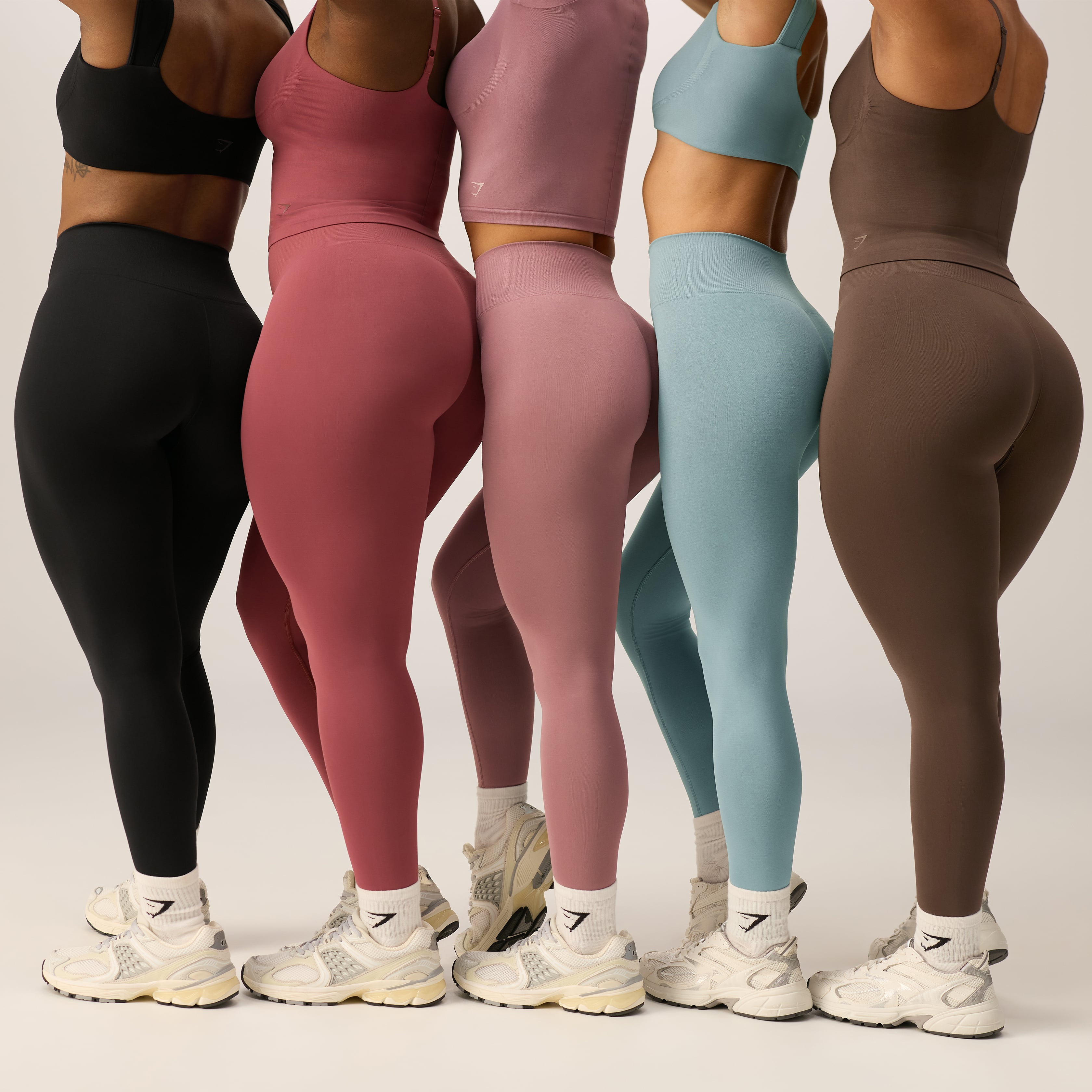
Let’s be honest - finding the perfect pair of leggings can feel like a workout in itself.
Too tight at the waist. Too short on the legs. Constantly slipping down mid-squat. Rolling waistband. See-through fabric. And don’t even get us started on the mystery of which size actually fits. The wrong pair doesn’t just mess with your comfort, it messes with your focus, your confidence, and your entire workout.
Whether you’re powering through a leg day, stretching it out in Pilates, or balancing running and strength training, your leggings should feel like they’re made for you. And with so many Gymshark collections - each with different fabrics, waistbands, seams, scrunches, and silhouettes - it’s no wonder you might be asking: which Gymshark leggings are right for me, and what size should I be getting?
That’s where this guide comes in. We’ve pulled together your most-searched questions and decoded all the details thanks to Laura Browne, our Senior Women’s Designer. From compressive to relaxed fits, to bum scrunches and waistband heights, we’ve created the ultimate sizing guide for Gymshark leggings.
No more guessing. Just the info you need to find the pair that fits your body, your training, and your lifestyle - perfectly.
Gymshark Legging Size Guide | How to Measure
The first step to finding the perfect fit when it comes to your leggings? Getting your measurements right.
Gymshark leggings are designed to fit true to size, but depending on the collection and your preferences (relaxed vs compressive fit), you might prefer sizing up or down. Before you hit "add to bag", grab a tape measure and note down your waist, hip, and inseam measurements; that’s the best place to start.
Always go by your hip measurement if you have a smaller waist and bigger glutes; that way, you’ll avoid sheerness and make sure the leggings actually stay in place while you move.

Here’s how to measure for leggings:
Waist: Wrap a measuring tape around the narrowest part of your waist (usually just above your belly button). Make sure it’s snug but not tight.
Hips: Measure around the fullest part of your hips and bum. This is where the widest part of the leggings will need to stretch - as above, make sure the tape is snug, but not too tight.
Inseam: Measure from the inside of your leg (crotch area) down to your ankle. This is especially useful for choosing between full-length, 7/8, cropped, or capri styles.
Leg length: Leggings will fit differently depending on your height. If you're taller, some styles may sit slightly shorter at the ankle - or even higher on the waist. If you're petite, full-length leggings might bunch at the bottom. Most of our styles are cut to a standard inseam length, but keep an eye out, some collections offer short and tall options to help you find your best fit.
Sizing Questions
Should I size up or down if I'm between sizes?
It depends on the style, but here’s the short answer: sizing up is usually the safer bet.
“It all comes down to style, fabric, and stretch,” says Laura. “If you’re between sizes, wearing a smaller size can often cause the leggings to slip down or feel sheer—especially in seamless styles. Sizing up, on the other hand, can offer better coverage and comfort.”
Compression styles naturally feel tighter, but that’s the point! It doesn’t mean you need to size up. Go with your usual size or size up if you want the extra breathing room.
If you prefer that sculpted, locked-in fit (especially for HIIT or running), stay true to size or choose a compressive fit. But if you're looking for more flexibility or everyday comfort, going up a size usually provides better coverage and ease of movement.
Worried about a loose fit? A drawcord waistband (like in our Running Leggings) is a good solution as it lets you customize the waist and keep your leggings in place for a more secure feel, even if you’ve sized up.
And remember, you can always exchange them if the fit’s not quite right.
What size should I get if I have a small waist but bigger hips/glutes?
If you’re curvier through the hips and glutes, the best move is to go by your hip measurement, even if that means sizing up.
Wearing a smaller size might seem like the right call for your waist, but it can lead to leggings riding down or feeling sheer when stretched across the glutes, especially in seamless styles. Sizing up ensures better coverage and comfort in as you move.
Laura recommends trying collections with tighter, more compressive waistbands like Gymshark Vital and Adapt, as they tend to adapt better to curvier shapes.
If the waistband feels too loose once you’ve sized up, try rolling it down or opting for a legging with a drawcord style that enables you to properly customize the fit.
Do Gymshark leggings run true to size?
“Yes! All our styles are wearer-trialed on a variety of body shapes to ensure each size fits as it should,” Laura tells us. “Whether you're a size S or XL, you can count on a consistent fit that flatters your shape.”
However, the fit can still vary slightly between styles depending on compression and stretch. Check the product’s fit description and reviews, and look at TikTok try-ons for real-life insight on sizing.
What Affects the Fit of Your Leggings?
You know that feeling—when one pair of leggings fits like a dream, and another (same size, maybe even the same brand) just doesn’t hit the same? You’re not alone, and you’re not imagining it.
That difference usually comes down to the design details. From fabric weight to seam placement to the tightness of the waistband, there are small but important features that shape how leggings fit, feel, and move with your body.
So if you’ve ever asked yourself, “Why do these leggings feel tighter / looser / thicker than my others?” - here are the answers you’ve been looking for.
Compressive vs Relaxed Fits
Let’s talk compression. That snug, second-skin feel you get from high-compression leggings? It’s there for a reason: offering muscle support, security, and a held-in fit that moves with you through every lift, lunge and PB. But here’s the thing: compression can feel tight.


“A compressive should feel snug and supportive… it helps reduce muscle oscillation, improve efficiency, and reduce fatigue,” making them perfect for high-impact workouts like running, plyometrics or weightifting where extra support and stability can make all the difference explains Laura.
The lower the percentage of elastane = the more compressive the leggings will feel.
Compressive Fit Leggings:
Adapt: (Camo: 7% elastane)
Lift Seamless: (8% elastane)
Vital Seamless: (7% elastane)
Soft Sculpt: (7% elastane)
“If you’re in between sizes or prefer a less restrictive fit, it might feel a little too much to wear compression-style leggings for everyday wear or lower-impact sessions like yoga.” mentions Laura. Instead, opt for something with a more relaxed fit (with higher elastane).
Undecided on what Vital leggings to choose? Discover the compression, fit, and design differences between Vital and Vital Soft in our guide to the Vital collections.
Relaxed Fit Leggings
Some styles are designed to feel more effortless, stretchy, flexible, and wearable from studio to sofa. These are your “throw on and go” leggings. They move with you, breathe with you, and feel almost weightless. Perfect for Pilates, dog walks, long-haul flights - or just days when you want leggings to feel like leggings, not shapewear.
So if you’re looking for something relaxed and breathable, we’re talking 22% elastane styles like:
Whitney, with its buttery elastane blend and super-soft finish
Training, a simple pair of leggings with that lived-in feel from first wear
Elevate, ideal for flexibility, breathability, and studio workouts
The higher the elastane, the stretchier the feel. So if compression isn't your vibe right now? These are the leggings for you.
Fabric Thickness
Not all leggings are built the same, and a big part of what makes one pair feel totally different from another? The fabric weight and thickness.


Thicker fabrics offer more structure, support, and coverage. They’re ideal for strength training, colder weather sessions, or anytime you want that sculpted, held-in feel, particularly around the core and glutes. But that extra support can come with added warmth and a slightly firmer fit, which might feel restrictive during sweatier or high-mobility workouts (plyometrics, yoga, bouldering, etc).
Thinner fabrics, on the other hand, feel weightless, stretchy, and breathable- perfect for working out in warmer climates, cardio, or low-impact sessions like Pilates and yoga. They move with you effortlessly. While thin might feel lightweight and great for a hot-weather session, it can sometimes lack the coverage and confidence needed for the squat rack and offer less structure or modesty, especially in light colours or high-stretch positions.
Here’s how the collections compare:
Thin/Breathable: Elevate, Running, Whitney, Training, Soft Sculpt
💡 Real talk: If you’re new to Gymshark and your first pair is something like Adapt Camo, they might feel a little heavy or restrictive if you’re using them for yoga or running. That’s not a design flaw; it’s just not the right match for the movement. These are our compressive leggings, and their thickness is made to hold up under pressure… think squats, deadlifts, and leg day lifts, not necessarily downward dogs and 10Ks.
So, what should you go for?
Want warmth, coverage, or extra support around your midsection?
Go for thicker fabrics like Adapt, Vital, or Lift Seamless. They’ll sculpt and support you through every heavy rep.
Prefer flexibility, stretch, and freedom of movement?
Opt for lightweight, breathable fabrics like Elevate, Whitney, or Running. These collections are made for flow, speed, and comfort.
And if you’re after something versatile? Choose your leggings based on your most frequent workout style.
Waistband Style
If you’ve ever had to pause mid-squat to adjust your leggings or felt the waistband dig in before you’ve even started moving, you know how important this key feature can be.


Rolling, slipping, digging in, or sitting too high on your torso- waistband issues are one of the most common reasons people don’t feel confident in their leggings. And the truth is, it’s not always about sizing. Sometimes, it’s the style of waistband that just isn’t right for your body or your workout.
That’s why we offer a variety of waistband designs. Here’s how they differentiate, and how you can find the right one for you:
Smaller Waistbands: Often found on low-rise or Training styles, giving a more relaxed and flexible fit.
Taller Waistbands: Seen on styles like Adapt, these offer more coverage and hold, ideal for hinging and squatting.
Ribbed Waistbands: Add texture and structure for a more sculpted hold and often more compression.
Flat-Lock Waistbands: Minimise bulk and chafing with smoother seams, perfect for relaxed yoga ‘fits.
Seamless Waistbands: Blend into the legging body for maximum comfort and a minimal style.
Want to avoid the waistband rolling when you squat? Go for a taller, compressive waistband. Prefer comfort over core-hugging support? A slimmer or seamless option might suit you better and solve the digging-in issue.
If you prefer more support around the waist, opt for high-rise leggings with compressive waistbands like Adapt or Vital. If you like something more flexible or have to roll your waistband down because it sits too high, look for low-profile waistbands like our Running Leggings or the Training Leggings.
Bum Scrunch or No Bum Scrunch
Whether you love that sculpted, peachy look or prefer something more subtle, glute detailing can make a big difference to how your leggings fit, and how confident you feel in them.


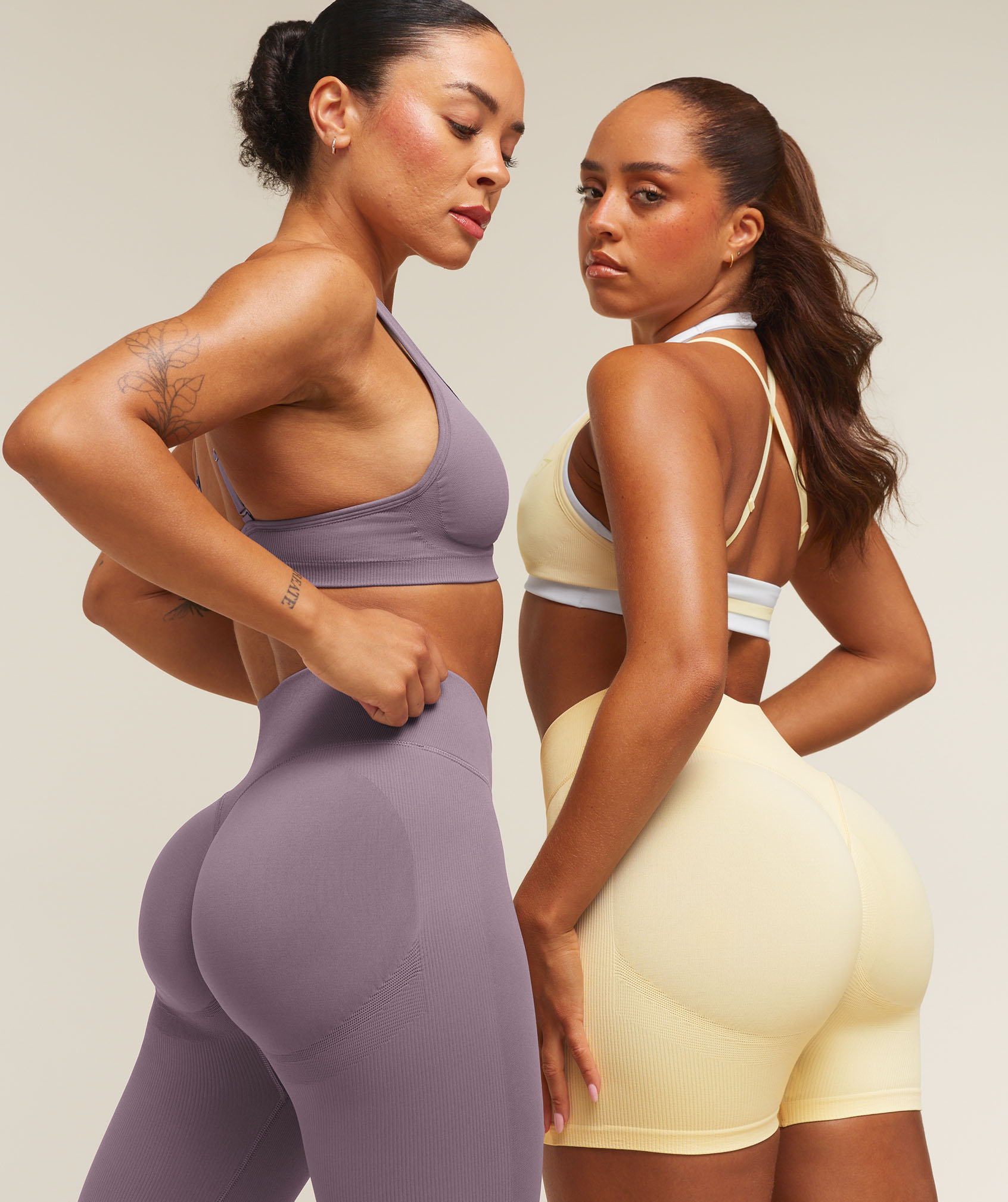
A bum scrunch is a ruched seam that runs along the glutes, either stitched internally or externally, designed to enhance shape by adding lift, definition, and separation.
“Back seams or scrunches help define the natural curve of your glutes.” says Laura. “Without them, the fabric can smooth everything into one shape”.
But butt scrunches aren't for everyone. Depending on your glute shape or height, the scrunch seam can sometimes sit too high, landing on the lower back rather than the glutes. If that’s the case you could try:
Internal scrunch seams (like Legacy or Whitney) for a more natural fit
Or contouring panels and shading (like Vital, Lifting Pocket, or Diffuse Seamless) to define the glutes without the scrunch
If you prefer a more subtle shape or modest silhouette, seamless styles without the scrunch should be your go-to. Here’s how a few of our collections compare:
With scrunch: Lift Seamless, Vital Sculpt, Whitney, Lifting Dipped, Power
Without scrunch: Diffuse, Training, Elevate, Everyday
If you’re new to bum scrunch leggings, be prepared for a more defined look and snugger feel. Sizing up can help reduce tightness across the glutes if needed.
Seams… and Cameltoe
Cameltoe: while it’s largely down to anatomy, the combo of legging fabric, rise, and seam placement can make all the difference when it comes to the way your leggings fit.
While some styles feature front seams for added shaping and body contouring, they can also create unwanted bunching and discomfort, especially with thinner fabrics or a legging that has a tighter fit. This is where you’ll want to turn your attention to seamless…
Whether you’re looking to avoid cameltoe, or you just don’t like the placement of a front-seam, collections like Adapt Seamless, Soft Sculpt and Vital will soon become your best friend: specifically engineered without front seams for added comfort (and a smoother fit).
That being said, when it comes to leggings, it’s not a one-style-fits-all: what works well for one person may not suit another, so trying different styles is key to finding your perfect leggings.
Leg Lengths
Length really matters. Too short and you’re left with an unintentional capri, and an awkward gap between your socks and your leggings. Too long, and you’ll have to roll the excess fabric sitting at your ankles.


Model is 5'1, and Wears our 'Short Length' Vital Seamless Leggings in a Size S.
Model is 6'0 and Wears our 'Tall Length' Vital Seamless Leggings in a Size S.
Model is 5'1, and Wears our 'Short Length' Vital Seamless Leggings in a Size S.
Model is 6'0 and Wears our 'Tall Length' Vital Seamless Leggings in a Size S.
Your height, inseam, and even your calf size can all affect how your leggings sit on the body - and whether we like it or not, it’s something that can impact both our comfort, and our performance.
Most Gymshark leggings are available in full-length (down to the ankle but there are cropped (capri) options or 7/8s depending on your preference, height, and proportions.
Capri/Cropped: Best for petite heights looking for a full-length feel, warm weather, Y2K styling
7/8s Length: Hits just above the ankle - ideal for everyday wear and those of average height
Full-Length: Great for taller individuals in need of more coverage or cold-weather training
We offer tall and short versions in selected styles like Elevate and Vital, which can help if your inseam measures between 2 sizes, and you’re in-need of more customised leg coverage.
To find your best leg length, measure your inseam from the inside of your leg (crotch to ankle). If you’re unsure whether to go for short, regular, or tall, try on the regular length first - if there’s bunching at the ankle, go short; if the leg feels too short or the rise sits low, try tall.
Color (Yep, Really)
Same size, different color - but they feel completely different on? You’re not imagining it.
Darker fabrics (especially black) can “sometimes feel more snug than the same product in a lighter colorway, due to the dyeing and finishing process”, mentions Laura.
Lighter shades, however, might feel a little stretchier, but can sometimes offer less coverage, and sheer out, especially during deep stretches or squats.
“We carefully test and compare all color variations to make sure every pair of leggings fits and performs the way they should”, but it never hurts to read reviews and try multiple shades if fit is your top priority.
Rolling Your Waistband Down? Here’s What It Might Be Telling You
Whether it’s for a low-rise aesthetic, or to ease the pressure post-meal or mid-workout, rolling your waistband down can feel like a quick fix. But if it’s something you find yourself doing every time you wear your leggings - that’s not just a habit, it’s a fit flag.
Rolling too often can stretch out the waistband and stop it from staying put, meaning that over time, your leggings won’t last (or perform) the way they’re meant to. If you’re constantly folding the waistband, consider switching to a mid, or low-rise fit legging that’s designed to sit right where you want it to - no adjustments, no compromise.
Leggings FAQs
Why do some leggings give me a ‘unibum’ or no glute separation?
If you find your leggings make your peach look a little flatter than it actually is (we’ve all been there), it’s often down to two reasons:
Incorrect sizing: If your leggings are too tight and don’t actually have enough stretch to sit naturally between the glutes, they can compress your shape and create that dreaded ‘unibum’ feel. In these circumstances, we’d suggest trying a size up and giving it a little wiggle, lift and tuck (otherwise known as the
TikTok Scrunch Hack - you’d be surprised how much difference it makes.
No glute detailing: “If your leggings don’t feature specific glute-enhancing elements like a scrunch seam, ruched stitching, or contouring panels, the fabric tends to stretch flat against your bum-smoothing everything into one shape, rather than sculpting and defining your glutes” says Laura. If you’re looking for a sculpted, peachy look, opt for leggings with intentional glute detailing like our Adapt Seamless collection.
How do I avoid camel toe in Gymshark leggings?
The easiest fix: choose seamless leggings without a front seam - like Whitney, Soft Sculpt or Adapt. Also, make sure you’re wearing seamless underwear and not sizing down too much, as tight fabric across the front can increase the definition in that area.
What does ‘compressive fit’ actually feel like?
Think of it like shapewear, but gym-approved.
When we talk about compression at Gymshark, it’s not medical grade. Instead, it’s like a supportive hug… it holds you in, sculpts the body, and reduces movement during high-impact workouts.
“A compressive fit feels snug and supportive… it helps reduce muscle oscillation, improve efficiency, and reduce fatigue,” says Laura.
They will feel tighter than your everyday leggings; that’s normal. But if it digs in or feels restrictive, try sizing up or switching to a softer style like Elevate or Training.
Can I work out in leggings that feel slightly loose at the waist?
You can, depending on the workout and if you feel comfortable.
For low-impact activities like strength training, stretching or walking, a slightly looser waistband can actually feel more comfortable. It gives you breathing room, avoids digging in, and reduces pressure on the stomach when sitting or bending.
But for running, HIIT or anything high intensity? You’ll want a secure, stay-put fit. A loose waistband in these sessions can lead to constant adjusting or your leggings slipping as you sweat… not ideal.
Why do some leggings have drawcord waistbands?
Trust us, they have a purpose.
Drawcords allow you to adjust the waistband for an completely customized fit depending on your waist-to-hip ratio or how you’re feeling that day (hello, bloat). Ideal for running or cardio when you need that extra hold from your leggings.
“Drawcords give you that extra bit of adjustability when you need it,” Laura notes. “Especially useful on days when you feel a bit more bloated or need more hold during cardio.”
They’re also a great choice for those with a smaller waist-to-hip ratio who have sized up and need to prevent the waistband from slipping down on their leggings.
Will my leggings stretch out over time?
Not if you treat them right. “All of our leggings are rigorously wearer-trialled and wash-tested to ensure they maintain their shape and resist bagging over time,” says Laura. Translation? With proper care, your leggings should stay snug and sculpted - just like day one.
To keep them feeling brand new: wash your leggings in cold water on a synthetic cycle (or as your care label instructs), and skip the fabric softener - it weakens the elastane fibres which could cause your leggings to stretch quickly,” adds Laura. And always, always air dry.
Final Tips
When it comes to finding your perfect leggings, the details matter. Waistband style, fabric thickness, compression level, seams, even color, all play a role in how leggings fit and feel on your body.
If your leggings are rolling, riding up, or digging in, it’s not you- it’s likely the style, size, or fabric choice. Listen to your body and don’t be afraid to switch it up. Try a different rise, go for a stretchier waistband, or opt for a lighter fabric if you need more give.
It’s all about finding what works for you, so whether that’s something dark and compressive for a supportive feel, or lightweight and adjustable, at the end of the day, comfort during your workout is key.
Comfort = confidence.
And if the fit’s not right? We’ve got you. Gymshark offers free returns in the UK and US. You’ve got 30 days to swap or return, just keep the tags on and make sure they’re unworn.
